Home / Products / NCG

Functional Amino Acid · NCG

NCG

N-carbamylglutamate

NCG is an analogue of N-acetyl-L-glutamate (NAG) that acts in its place in the urea cycle, where endogenous arginine is produced. Arginine matters greatly for reproduction, lactation, immunity, and growth — yet feeding arginine directly is costly and it degrades readily in the rumen. NCG is chemically stable, resists rumen degradation, works at low inclusion rates, and efficiently activates the body's own arginine synthesis — making it a more economical and practical alternative to arginine.

Mechanism of action

As a functional analogue of NAG, NCG activates CPS-I, the first rate-limiting enzyme in the urea cycle. This enzyme catalyzes the reaction of ammonia and carbon dioxide into carbamoyl phosphate — a key step in the endogenous synthesis of arginine. By accelerating the urea cycle, NCG reduces the concentration of ammonia and carbon dioxide in the blood, improving the utilization of nitrogen and carbon sources and reducing harm from ammonia.
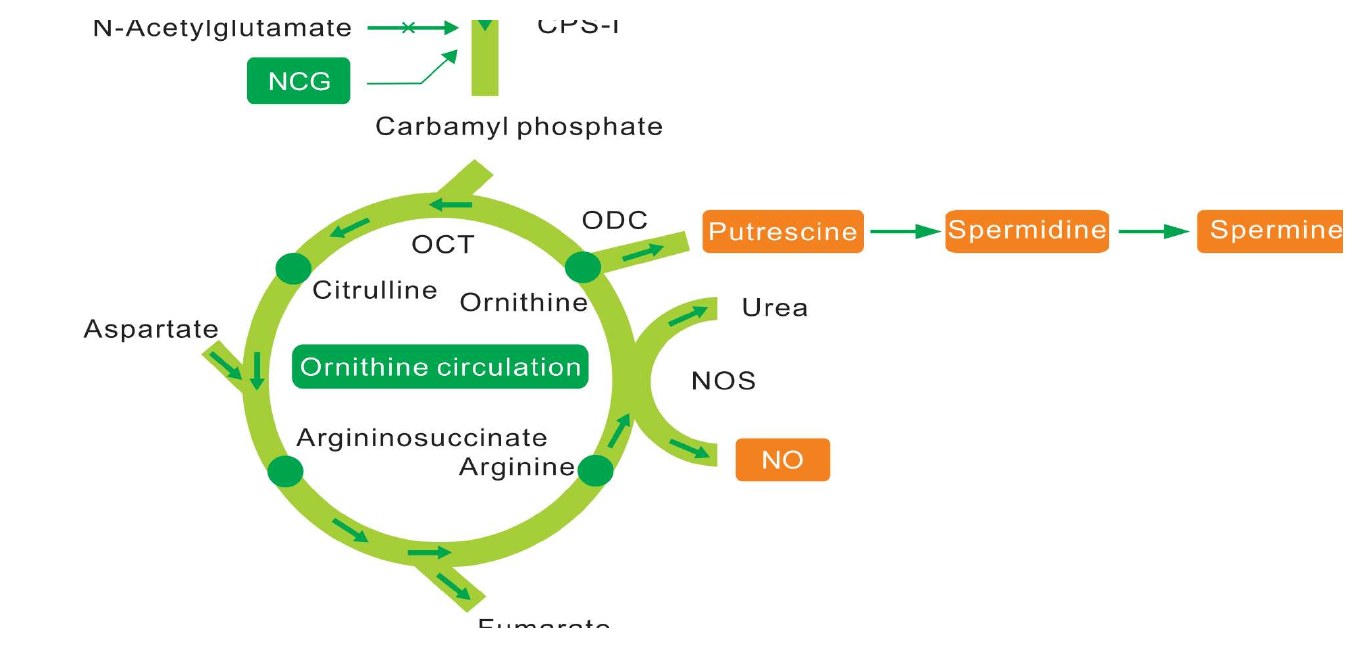
Diagram of NCG activating the urea cycle and endogenous arginine synthesis
NCG activates CPS-I to accelerate the urea cycle and promote endogenous arginine synthesis (urea cycle diagram)

The polyamines produced by the urea cycle promote protein synthesis and tissue growth and improve immunity, while NO contributes to capillary development and blood circulation, delivering more nutrients and oxygen to the body. As a result, small-intestinal villi and rumen papillae become richer in capillaries, boosting the digestion and absorption of feed. Ruminants can additionally make use of the urea produced through saliva and the rumen wall, benefiting their growth and health.

Main functions

  • Improved reproduction: NO dilates blood vessels and improves tissue blood supply, promoting placental capillary development and intestinal villus growth, markedly enhancing immunity; by lowering blood ammonia and easing liver burden, it promotes uterine development and ovulation, raising the conception rate.
  • Better nutrient utilization: accelerating the urea cycle improves nitrogen and carbon use, supporting protein synthesis and nutrient partitioning and raising feed efficiency.
  • Enhanced animal health: reducing the harm of blood ammonia and relieving heat stress, improving meat quality and overall health.

Applications by species

  • Pregnant sows: increases litter size and piglet birth weight, improves reproductive performance, and promotes placental capillary development and mother–offspring health.
  • Lactating dairy cows: raises plasma arginine and nitric oxide, lowers blood ammonia, improves lactation performance and nitrogen utilization, promotes intestinal and rumen capillary development, and relieves heat stress.
  • Japanese sea bass (perch): strengthens endogenous arginine synthesis, raises feed intake and nutrient use, and supports intestinal development, immunity, and anti-stress capacity.

Approved scope per China's current Feed Additive Catalogue: pregnant sows, Japanese sea bass, and lactating dairy cows.

Packaging & shelf life

  • Packaging: 25 kg / bag.
  • Shelf life: 18 months in a cool, dry place.
Need specifications, dosage guidance, or a quote? Contact us →